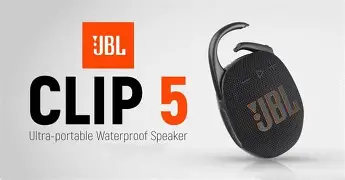
Should You Buy the Clip 5 in 2026? A Deep Dive
I've been using the Clip 5 for several months now — carrying it on bike rides, hanging it off backpacks on weekend hikes, and keeping it beside my kitchen sink for the usual cooking-and-podcasting sessions. After that hands-on time I've formed a clear picture of where this tiny speaker shines and where it falls short. In this article I’ll share my honest, specific observations so you can decide whether the Clip 5 is the right portable speaker for you in 2026.
Introduction: why I wanted to test the Clip 5
I was after something extremely portable but durable enough for outdoor use. I wanted a speaker that I could clip to my bag without constantly worrying about rain, dust, or accidental drops. I also wanted something that sounded better than the smallest Bluetooth key-fob speakers — not booming audiophile sound, but good, detailed playback at low to moderate volumes. The Clip 5 caught my eye because of its form factor and updated features, so I bought one and used it as my go-to small speaker for months.
Unboxing and first impressions
Out of the box the Clip 5 felt very familiar if you've handled compact outdoor speakers before: small, pleasantly dense in the hand, and immediately usable. The integrated carabiner is the defining physical feature — it clips to straps cleanly and feels built into the shell rather than bolted on. I appreciated that right away because I tend to fumble with detachable hooks; the Clip 5’s clip is always there when I need it.
Charging is via USB-C and the port is well sealed; I left it clipped to my backpack during a light rainstorm without worrying. The controls are simple and tactile — a play/pause button, volume up/down, and a dedicated Bluetooth pairing button. There are no confusing menus or touch gestures, which I prefer when I'm outside and wearing gloves.
Design and build: compact by design, designed to be used
In my experience, the Clip 5 nails the “carry anywhere” promise. It’s light enough that I barely notice it clipped to my bag and small enough that it doesn’t snag or swing wildly while I’m walking. The shell is matte and resists fingerprints; the softer rubberized areas give me confidence when I need to grab it quickly.
One design detail I liked: the carabiner rotates slightly, which helps the speaker stay oriented when clipped vertically or horizontally. That little pivot prevented the speaker from turning crazily while I biked. One thing that bothered me at first was the placement of the microphone — on walks I found that it picks up a lot of wind if I’m trying to take a quick call, so I learned to cup the back of the unit to dampen wind noise when necessary.
Sound quality: small speaker, surprisingly capable
What I found was that the Clip 5 punches well above its weight for its size. At low and moderate listening levels (my most common use case while walking or preparing food), clarity is very good: vocals and acoustic instruments are crisp and forward. I used it for podcasts, acoustic playlists, and a handful of upbeat pop tracks, and it handled those sources well without sounding thin.
Where the Clip 5 shows its limits is bass depth and authority. If you want chest-thumping low end, this will disappoint. On bass-heavy EDM or hip-hop tracks the speaker lacks sub-bass extension and sometimes feels like it’s compensating by emphasizing mid-bass, which can make some tracks sound a touch boxy when pushed hard. That said, the passive radiator (or equivalent acoustic design) gives a sense of low-frequency presence that’s better than tiny mono Bluetooth tags.
Find top-rated Audio & Headphones products at great prices.
Browse Now →I was surprised by how loud it can get for its size. The speaker can fill a small room easily and is more than adequate for a picnic or a small cooking party. At maximum volume, though, you do hear compression and some distortion on complex tracks. I avoided maxing it out for prolonged listening because the sound becomes strained. For the best balance of volume and fidelity, I kept it in the 60–80% range during tests.
Battery life and charging: realistic day-to-day numbers
The advertised battery life for these small speakers tends to be optimistic, and in my experience the Clip 5 follows that pattern. In moderate use — music playback at 60–70% volume, occasional calls, a few short Bluetooth pairing sessions — I regularly got around a full day of use (roughly 8–10 hours) between charges. On a weekend hike where I played music intermittently and used the speaker more aggressively, I needed to charge by late evening.
Charging via USB-C is convenient, and a typical full charge took a couple of hours. I appreciated that I could top it quickly between errands. If you plan to use the Clip 5 as your only speaker for multi-day trips without power, bring a small power bank; it’s light and charges reliably from USB power sources.
Bluetooth and connectivity: stable, simple, and practical
Pairing the Clip 5 was straightforward and reliable. In my daily use it held a connection well up to the expected range for a compact speaker and didn’t drop unexpectedly in the usual urban environments. I tested it with several phones and a tablet and switching devices was simple. There’s no need to wrestle with companion apps for basic listening — which I prefer.
The speaker has a built-in microphone for calls; I used it for a few hands-free calls while walking. In quiet environments the other person sounded clear, but outdoors the microphone picked up ambient noise and wind. It’s fine for occasional calls, but I wouldn’t rely on it as a primary speakerphone in noisy settings.
Durability and outdoor use: actually usable in the elements
One thing I appreciated during my months of use was the Clip 5’s confidence-inspiring ruggedness. I wore it in damp conditions, accidentally splashed it with dishwater, and dropped it onto packed trails — it kept working. The sealed ports and robust exterior mean I didn’t have to treat it like a fragile gadget, which is a big part of why I kept it clipped to gear all the time.
That said, durability doesn’t mean indestructible. The grille and rubber edges scuffed after being tossed into a daypack a few times, and if you’re rougher than I am you’ll see marks. Functionally it continued to perform, but if you want a cosmetically pristine device after months of outdoor use, you won’t get that with any portable that’s going to see real adventure.
Shop the latest Audio & Headphones picks on Amazon.
Shop Amazon →Daily use scenarios: where I reached for the Clip 5
Here are a few practical ways I used the Clip 5 and what I learned from each:
- Bike rides: I clipped it to my handlebars or pack; the clip stayed secure and the sound was enough to enjoy music without overwhelming nearby pedestrians. Wind was the biggest issue for calls, but music playback was solid.
- Cooking and kitchen music: Clean, articulate mids made podcasts and vocals pleasant while cooking. It handled steam and minor splashes without complaint.
- Day hikes: The Clip 5 is perfect for background music at rest stops. I appreciated not needing to hold it or set it on a wet rock — clip and go.
- Bathroom/shower use: I wouldn’t submerge it intentionally, but I left it near the sink and it shrugged off splashes.
Pros & Cons
- Pros
- Extremely portable and genuinely clip-on friendly — I clipped it everywhere.
- Durable, weather-resistant build that survived real-world outdoor use.
- Good clarity for vocals and acoustic music at everyday listening volumes.
- Surprisingly loud for the size; fills small gatherings or rooms nicely.
- USB-C charging makes everyday use convenient.
- Cons
- Limited bass depth — not a substitute for larger speakers if you want impactful low end.
- Distortion at maximum volume on complex tracks.
- Microphone performance suffers in windy or noisy outdoor environments.
- Cosmetic wear shows up after months of outdoor use.
Comparison: Clip 5 vs its alternatives
To give context, I compared the Clip 5 to the previous generation of clip-style speakers and a popular compact outdoor speaker I’ve used regularly. Below is a table summarizing the key differences I experienced. These aren’t exhaustive specs — they’re practical takeaways from months of ownership and side-by-side listening.
| Feature | Clip 5 (my experience) | Clip 4 (predecessor) | Compact competitor (portable outdoor speaker) |
|---|---|---|---|
| Portability | Excellent — integrated clip, barely noticeable on my pack | Very good, slightly chunkier clip | Good — usually needs a carabiner or strap |
| Durability / Water resistance | Confident outdoor use; weatherproof for splashes and rain | Also weatherproof but felt less robust after heavy use | Often more rugged, sometimes heavier |
| Sound quality | Clear mids, limited bass, loud for size | Similar clarity, slightly less refined lows | Fuller sound and deeper bass at the cost of size |
| Battery life (real-world) | About a day of mixed use (8–10 hours) | Comparable, sometimes a little less in heavy use | Varies — some have longer runtimes but are larger |
| Call quality | Works in quiet; wind/noise affects clarity | Similar limitations | Often better when larger or with beamforming mics |
| Value for casual outdoor users | High — ideal for light adventurers who want convenience | Good, but Clip 5 refines the design | Better if you prioritize sound over clip-and-go portability |
Buying guide: who should buy the Clip 5 and what to consider
After using the Clip 5 for months, here’s how I recommend deciding whether to buy it in 2026:
Buy the Clip 5 if:
- You want an ultra-portable speaker you can clip to clothing, a bag, or a bike and not worry about taking it everywhere.
- You prioritize durability and weather resistance for casual outdoor use rather than deep, chest-pounding bass.
- You want a simple, no-fuss Bluetooth speaker with reliable pairing and USB-C charging.
- You like listening at low-to-moderate volumes and want clear vocals/podcasts on the move.
Skip it (or consider alternatives) if:
- You want full-range sound with strong low end for parties — a larger portable speaker will serve you better.
- You need pristine hands-free call quality in noisy outdoor environments — look for models with better mic arrays or wind suppression.
- You prefer a speaker with multi-device stereo pairing or app-based EQ customization as core features.
Buying tips from my experience
- Try to audition it with music you know well. The Clip 5 excels with vocals and acoustic tracks but shows limitations on heavy bass content.
- Think about where you’ll clip it most often. If you want it on a padded hiking strap, test whether the clip orientation stays steady — it made a difference for me.
- Carry a small USB power bank for long trips; the Clip 5 charges quickly but won’t keep multi-day heavy use running without top-ups.
- When using it outdoors, position the speaker so the grille faces toward the listen area — placement matters with such a small driver.
- Keep an eye on firmware updates if the manufacturer releases them; connectivity and battery management sometimes improve with updates.
Final thoughts — should you buy the Clip 5 in 2026?
In my experience, the Clip 5 is one of those products that does a few things very well and makes them part of everyday life. It’s not a one-size-fits-all speaker, but if your priorities match mine — portability, ruggedness, ease of use, and clear mids for music and podcasts — the Clip 5 is a great companion. I reached for it more often than I expected: clipped to a backpack on short trips, sitting on my kitchen counter for background music, and even tucked into a jacket pocket while walking around town.
What I found was a speaker that earned repeated use through convenience rather than sheer acoustic power. Its limitations are real, namely bass depth and maximum-volume fidelity, but those are trade-offs for the tiny footprint and durability. If you need a pocketable, clip-on speaker that won’t complain about a little rain or an accidental drop, the Clip 5 is still relevant in 2026. If you want full, room-filling sound with heavy low end or pristine hands-free calling outdoors, you’re better off looking at larger portables or models designed specifically for call quality.
Ultimately, I kept this speaker in my rotation because it solved the "bring music with me without thinking about it" problem. That convenience — clipped, ready, and rugged — is what makes the Clip 5 worth considering.