Qn900B 8K Qled Review: Real User Experience After 3 Months
Introduction
I've been using the Qn900B 8K QLED as my primary living-room TV for three months now. I bought it because I wanted the latest display technology, a very large screen, and future-proofing for next-generation consoles and streaming. In this review I’ll share what my daily experience has been like — what I loved, what surprised me, and what disappointed me after real-world use. I’ll cover setup, picture and audio performance, gaming, smart features, reliability, and give a practical buying guide so you know whether this is the right TV for you.
Unboxing, Setup & First Impressions
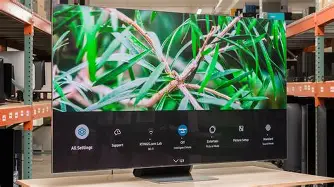
Unboxing was typical for a large-screen premium TV: heavy packaging, neat foam supports, and the “wow” factor when I first turned it on. I chose the 75" size for my living room. Setup was straightforward — the included stand felt solid and the remote was familiar if you’ve used modern smart TVs before. It took me a little time to route cables cleanly and calibrate picture modes to my liking, but the initial out-of-the-box picture looked impressively bright and detailed even on default settings.
One thing I noticed right away was how physically thin the panel is compared with older LED sets; the design is modern and unobtrusive on the wall. At the same time, the back is a bit cluttered with vents and ports, so plan for some cable management if you mount it.
Picture Quality: Real-World Performance
What I found was that the Qn900B excels when it comes to sheer brightness and highlights. HDR content (Dolby Vision and HDR10) pops in a way many 4K sets struggle to match. Bright specular highlights on movies and documentary footage looked vivid and retained detail without washing out. In bright rooms, the high peak brightness was useful — images stayed lively even with sunlight hitting the screen.
Where the Qn900B struggles, and where I was most surprised, is with uniform dark scenes and near-black details. On some cinematic scenes with large, uniform dark backgrounds I noticed a mild clouding/blooming effect around very bright objects. It’s not extreme, but compared to the best OLEDs the blacks are less "infinite." If you watch a lot of dim, high-contrast cinema in a dark room, that nuance matters.
The 8K resolution itself is a mixed bag. Native 8K content is still rare, so most of what I watch is upscaled 4K or 1080p. The TV's upscaling engine did a noticeably good job with 4K-to-8K upscaling — faces, textures, and fine details became crisper without obvious artifacts. Upscaled 1080p content improved too, but not as dramatically. For everyday TV and streaming the upscaler adds pleasant sharpness rather than unnatural sharpening.
Color, Contrast, and Viewing Angles
Colors are rich and well-saturated out of the box; I preferred switching to a calibrated movie mode for accuracy when watching films. The TV handles skin tones very naturally, and bright colors maintain saturation without clipping. Viewing angles are decent for a VA-type panel: colors shift a bit when you move far off-center, but for normal living-room seating the picture stayed consistent.
Motion and Upscaling
I tested fast-moving sports and action movies and found motion handling to be solid. The TV does a good job of reducing judder and blur when motion smoothing is enabled, though I personally keep it off for movies because it introduces a “soap opera” effect. For sports and live events I like engaging the motion features to keep the action crisp. The upscaler preserves motion clarity without introducing obvious doubling or ghosting.
HDR and Brightness
In my experience the Qn900B is one of the brighter TVs I've owned. HDR highlights are impactful — sun reflections, specular lighting on cars, and bright title cards really stand out. That said, HDR tone-mapping can vary by title and streaming app. Some Dolby Vision streams looked perfect, others were a touch aggressive in highlight roll-off until I adjusted the picture settings.
If you're looking for deep inky blacks for night-time movie viewing, be aware that while contrast is very good, it isn’t the same as perfect pixel-level black from OLEDs. I live with room lighting that’s rarely pitch dark, so the trade-off of high brightness over absolute black was acceptable for me.
Discover deals on TVs & Home Theater — updated daily.
See Deals →Gaming Performance
I used the Qn900B with a next-gen console and a PC. In Game Mode, input lag was low enough that I didn't notice delay playing fast-paced shooters and racing games — roughly what I’d expect from a modern premium TV. Variable refresh rate (VRR) and Auto Low Latency Mode (ALLM) worked as advertised, smoothing frame pacing and minimizing stutter.
One specific thing I appreciated: the large screen and high pixel density make ultra-detailed racing and simulation games feel more immersive. However, because native 8K gaming is effectively non-existent for most users today, the benefits show primarily as sharper upscaled visuals rather than true 8K game rendering.
Smart TV Platform & Features
The smart platform is responsive and includes the usual apps I use (major streaming services, YouTube, and the app store for additional apps). App performance has been reliable — apps launch quickly and updates arrive periodically. Voice control integration worked fine with my home assistant, and the universal guide made it easy to jump between inputs and streaming services.
What I found mildly annoying was the number of preinstalled partners and recommendation tiles. You can customize and remove some, but it takes a few steps to set things the way I prefer.
Audio Performance
The TV's built-in speakers are more capable than typical flat-panel sets. Dialogue clarity is excellent — I rarely needed to increase volume to hear voices clearly. For movies with wide dynamic range, the onboard sound handles midrange well and delivers decent impact on action scenes.
Having said that, I still preferred hooking up a soundbar for anything approaching home-theater quality. Bass depth and the sense of surround aren’t on par with a proper audio system. If you care about immersive sound, factor in a separate audio setup.
Design, Remote & Daily Use
Design-wise, I liked how understated the TV is when off. The bezels are minimal, giving a near-edge-to-edge picture. The remote is lightweight and intuitive; the button layout suits quick navigation. A small gripe: the remote’s glossy finish shows fingerprints if you’re a neat freak like me.
Daily use was largely trouble-free. I received a couple of firmware updates in the first month that improved app stability and tuned some picture profiles. No hardware failures or odd behavior in three months — the TV has felt solid and reliable.
What I Appreciated and What Bothered Me
- Appreciated: Incredible peak brightness and HDR highlights that make content pop in bright rooms.
- Appreciated: Excellent upscaling for 4K content — my streaming library looked noticeably sharper.
- Appreciated: Low-latency gaming performance and support for modern gaming features like VRR and ALLM.
- Bothered: Mild blooming/haloing around very bright objects on dark backgrounds — more noticeable in dark-room movie scenes than I expected.
- Bothered: Native 8K content scarcity means the 8K panel is mostly future-proofing rather than immediate benefit for most users.
- Bothered: The TV’s smart home interface shows too many recommended tiles and app suggestions by default.
Pros & Cons
- Pros
- Very bright, impactful HDR performance
- Strong 4K-to-8K upscaling that improves everyday content
- Excellent gaming features with low perceived input lag
- Elegant, thin design that looks great wall-mounted
- Reliable smart platform with frequent firmware updates
- Cons
- Black levels and uniformity not as perfect as top OLEDs
- Blooming/haloing visible in certain high-contrast scenes
- 8K content is still rare — most benefits come from upscaling
- Remote shows fingerprints; UI has cluttered recommendations
- Built-in audio is good but not a full replacement for a soundbar
Comparison Table
| Feature | Qn900B (my unit) | QN800B (8K competitor) | QN90B (4K high-end) |
|---|---|---|---|
| Peak Brightness | Very high — great for HDR in bright rooms | High — slightly less than Qn900B | High for 4K — excellent for everyday HDR |
| Black Level | Deep, but not OLED-perfect; some blooming | Similar, with slightly less contrast | Very good for 4K VA panel; close in dark scenes |
| Upscaling | Top-tier 4K→8K upscaling | Strong upscaler, marginally less refinement | Excellent 4K upscaling for lower-res sources |
| Gaming | Low lag, VRR, ALLM — great experience | Comparable gaming features | Excellent — often preferred for competitive play |
| Smart Platform | Responsive; customizable but has recommendations | Similar platform and features | Same platform; slightly faster app load in some cases |
| Best for | Bright-room cinema, large screens, future-proofing | 8K value buyers who want similar benefits at lower cost | 4K enthusiasts wanting top brightness without 8K premium |
Buying Guide: Is the Qn900B Right for You?
In my experience, deciding whether the Qn900B is the right TV depends on several practical points:
Discover deals on TVs & Home Theater — updated daily.
View Offers →Room Lighting and Viewing Habits
If you have a bright living room with plenty of ambient light, the Qn900B’s high brightness and HDR performance are real advantages. I noticed the picture stayed lively even in daylight. If your room is typically very dark and you prioritize absolute black levels for cinematic viewing, you might prefer an OLED.
Content You Watch
If you watch a lot of HDR-heavy movies, sports, or 4K streaming, the Qn900B improves the experience through brightness and upscaling. If you primarily watch standard-definition broadcasts and older shows, the upscaler helps, but the benefits aren’t as dramatic.
Gaming Needs
I recommend the Qn900B for console and PC gamers who want a large, immersive screen and low latency. If you’re a competitive gamer prioritizing fastest possible response from a smaller display, a 4K TV aimed at gamers might be a better fit.
Audio Considerations
Plan on pairing the Qn900B with a soundbar or home theater if you want an immersive audio experience. The built-in speakers are good for daily TV and dialogue, but they won’t replace a full audio setup for movies.
Size and Placement
Measure your viewing distance and choose a size that doesn’t overwhelm the room. I chose 75" for a roughly 10-12 foot viewing distance and found it immersive without being excessive. Wall mounting helps the slim profile look best and reduces glare when set up with angled placement.
Calibration Tip
Out of the box, the TV looks impressive, but I recommend switching to a cinema/movie mode and doing a quick calibration (either via basic on-screen tools or a professional calibration if you want precision). Tweaking local dimming and contrast settings made a noticeable improvement for my dark-scene performance.
Conclusion
After three months with the Qn900B 8K QLED, my overall feeling is that this TV delivers on the promise of bright, punchy HDR and excellent upscaling for today’s 4K content. It’s a compelling choice if you want large-screen impact, strong gaming features, and a future-ready panel. The main trade-offs are that true 8K content is still limited and that blacks and uniformity don’t quite match the absolute best OLEDs in very dark rooms.
In my experience, if you prioritize bright-room performance, large-size immersion, and top-tier upscaling, the Qn900B is a rewarding TV to live with. If your priority is perfect blacks in a dark home theater and native OLED characteristics, you may prefer an OLED panel instead. For me, the Qn900B hit the sweet spot for everyday viewing, gaming, and bright-room movie nights — with a few small caveats I could live with after tweaking the settings.