I Switched to the Momentum True Wireless 3 and Here is What Happened
The landscape of premium audio has shifted dramatically over the last decade. Where once a pair of high-fidelity headphones required a dedicated amplifier and a literal physical tether to a source device, the modern listener now demands that same level of acoustic precision in a form factor that fits inside a pocket. In the competitive arena of flagship true wireless earbuds, the Sennheiser Momentum True Wireless 3 represents a significant evolution in a series known for prioritizing sound quality above all else. This article explores the transition to these earbuds, analyzing how they perform in real-world environments and whether the engineering choices made by Sennheiser meet the rigorous demands of contemporary audiophiles and daily commuters alike.
The Evolution of a Flagship: Design and Ergonomics
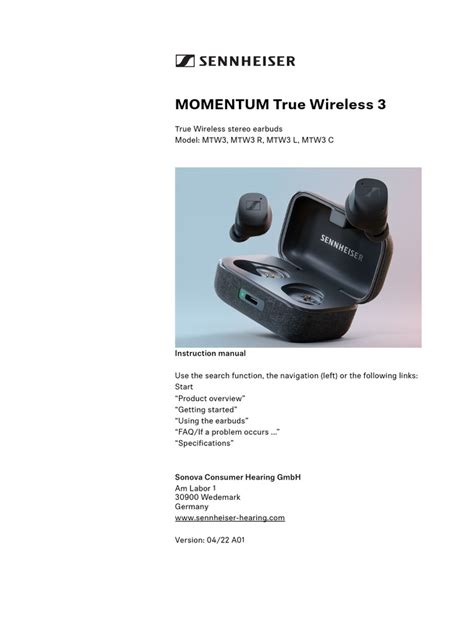
Moving to the Momentum True Wireless 3 often begins with a physical adjustment. Unlike many competitors that opt for a "stem" design, Sennheiser has refined its signature rounded-housing approach. This third iteration is noticeably more compact than its predecessors, addressing one of the primary complaints of the earlier models: bulk. The reduction in volume makes the earbuds sit more flush with the ear, which significantly improves weight distribution and reduces the "tugging" sensation during long listening sessions.
One of the most impactful design changes is the inclusion of "fins" or wingtips. For many users, true wireless earbuds are a source of constant anxiety regarding security. The Momentum True Wireless 3 includes several sizes of silicone fins that tuck into the cymba of the ear. This addition transforms the earbuds from a purely lifestyle accessory into something capable of withstanding the rigors of a light workout or a brisk walk through a crowded subway station. The materials feel premium, utilizing a matte plastic that resists fingerprints better than glossy alternatives, while the charging case retains the iconic fabric-wrapped aesthetic that has become a hallmark of the Momentum line.
Acoustic Performance: The Core Experience
The primary reason most enthusiasts switch to the Momentum True Wireless 3 is the promise of superior sound. Sennheiser utilizes their 7mm TrueResponse transducers, which are manufactured in Germany. Unlike many consumer-grade earbuds that rely on a V-shaped sound profile—emphasizing boosted bass and piercing highs at the expense of the midrange—the Momentum True Wireless 3 aims for a more balanced, "audiophile-lite" signature.
Upon initial use, the most striking characteristic is the soundstage. While earbuds are inherently limited by their closed-back, in-ear nature, Sennheiser has managed to create a sense of space that feels wider than the industry average. Instrumentation is clearly defined; for instance, in complex orchestral tracks or layered jazz recordings, the listener can distinguish between the placement of woodwinds and strings with surprising clarity. The low-end response is authoritative but disciplined. It provides the necessary "thump" for contemporary genres without bleeding into the lower mids, ensuring that vocal clarity remains a priority.
The high frequencies are where many earbuds fail by becoming fatigue-inducing. The Momentum True Wireless 3 avoids this by rolling off the highest peaks just enough to maintain detail without causing "hiss" or sibilance. For those who prefer a specific sound signature, the companion Smart Control app offers a "Sound Personalization" feature. Rather than a standard equalizer, this tool walks the user through a series of listening tests to create a bespoke frequency response curve based on individual hearing preferences and the specific genres they frequent.
Advanced Features: ANC and Transparency
In the current market, sound quality alone is insufficient. Active Noise Cancellation (ANC) has become a non-negotiable requirement for premium earbuds. The Momentum True Wireless 3 introduces Adaptive ANC, which constantly monitors ambient noise levels and adjusts the intensity of the cancellation accordingly. When walking from a quiet office into a noisy street, the transition is seamless. The technology is particularly effective at neutralizing low-frequency drones, such as the hum of an airplane engine or the rumble of a bus.
However, the ANC performance does face stiff competition. While it is excellent at lowering the volume of the world around you, it may not reach the total "silence" offered by some rivals focused purely on office isolation. Where Sennheiser excels is in the Transparency Mode. This feature uses the external microphones to pipe in outside sound, allowing for conversations without removing the earbuds. The implementation here feels natural rather than processed or "robotic," maintaining a good sense of spatial awareness for the user.
The Comparison Table
To understand where the Momentum True Wireless 3 sits in the broader market, it is helpful to look at its technical specifications and feature set relative to the standard expectations of the flagship category.
Shop the latest Audio & Headphones picks on Amazon.
Shop Amazon →| Feature Category | Momentum True Wireless 3 Specification | Real-World Impact |
|---|---|---|
| Driver Type | 7mm TrueResponse Dynamic | Provides high-fidelity, low-distortion audio with a wide soundstage. |
| Bluetooth Codecs | SBC, AAC, aptX, aptX Adaptive | Ensures high-resolution audio streaming and low latency on compatible devices. |
| Battery Life | 7 hours (buds) / 28 hours (total with case) | Sufficient for a full workday and a week of commuting on a single charge. |
| IP Rating | IPX4 (splash resistant) | Protected against sweat and rain, making them suitable for exercise. |
| Charging | USB-C and Qi Wireless | Versatile charging options for home or on the go. |
Real-World Reliability and Connectivity
A frequent pain point for true wireless users is connectivity. The Momentum True Wireless 3 uses Bluetooth 5.2 and supports multipoint connectivity via firmware updates. Multipoint is a critical feature for the modern professional, allowing the earbuds to remain connected to both a laptop for video calls and a smartphone for music. The transition between these two sources is generally smooth, though the speed of the switch can occasionally depend on the operating systems of the source devices.
The microphone array has also seen improvements. Utilizing three microphones per earbud, the system works to isolate the user's voice from background wind and chatter. In testing during outdoor calls, voices come through with a natural tone, though like all earbuds, extreme wind can still pose a challenge to the beamforming algorithms. The touch controls are highly customizable, allowing users to map specific functions—such as volume control, voice assistant activation, or ANC toggling—to specific tap sequences on either earbud.
Buying Guide: Is It the Right Choice for You?
Choosing a pair of high-end earbuds involves weighing several factors beyond just the price tag. Buyers should consider their primary use cases before committing to the Momentum True Wireless 3.
Consider Your Environment
If your primary goal is to block out the sounds of a bustling open-plan office or a frequent long-haul flight, the ANC capabilities of the Momentum True Wireless 3 will serve you well. However, if you work in an environment where you need to hear your own voice clearly during calls (sidetone), you should ensure you dive into the app settings to enable this feature, as it enhances the naturalness of speaking while wearing sealed earbuds.
Prioritize Audio Source Quality
To get the most out of these earbuds, your source device matters. Since these support aptX Adaptive, users with Android devices capable of this codec will experience higher bitrates and lower latency than those limited to standard AAC. This is particularly important for watching videos or playing games, where audio-sync issues can be distracting. iPhone users will still benefit from the superior driver tuning, but won't be able to take advantage of the high-resolution aptX suite.
Evaluate Fit and Comfort
Because the Momentum True Wireless 3 relies on a twist-to-lock fit combined with silicone fins, it is essential to spend time with the various ear tip sizes included in the box. A poor seal not only compromises comfort but also devastates the bass response and ANC effectiveness. Users with very small ears may find the housing slightly large, though the redesigned shape is the most accommodating version Sennheiser has produced to date.
Pros and Cons
- Pro: Class-Leading Sound Quality – The emphasis on a balanced, detailed frequency response makes these a top choice for music lovers.
- Pro: Refined Aesthetics – The fabric-wrapped case and compact earbud design feel more like a premium piece of technology than a piece of plastic hardware.
- Pro: Customizable Controls – The ability to remap every touch interaction through the app allows for a tailored user experience.
- Pro: Robust Codec Support – Inclusion of aptX Adaptive ensures the earbuds remain future-proof for high-resolution streaming.
- Con: ANC is Competitive but Not Industry-Best – While very effective, those seeking absolute silence in the harshest environments may find other specialized models slightly more potent.
- Con: IPX4 Rating Only – While fine for sweat, they cannot be submerged, which may be a drawback for those seeking ultra-rugged sports earbuds.
- Con: App Stability – Some users may find the companion app occasionally slow to recognize the earbuds upon initial connection.
The Impact of the Customization App
The Sennheiser Smart Control app is more than just a utility; it is an integral part of the "switching" experience. In previous years, hardware was static. Today, the software defines the longevity of the product. The Momentum True Wireless 3 benefits from regular firmware updates that have, over time, improved the speed of the ANC response and refined the multipoint switching logic.
The "Sound Zones" feature is particularly worth noting. This allows the earbuds to automatically change settings based on the user's geographic location. For example, the earbuds can be set to automatically turn on High ANC and turn off touch controls when you arrive at a specific gym location, or switch to Transparency Mode and a "Podcast" EQ setting when you arrive at your home address. This level of automation reduces the need for manual adjustments, allowing the technology to fade into the background of daily life.
Find top-rated Audio & Headphones products at great prices.
See Deals →Battery Life in Practice
Battery anxiety is a real phenomenon for true wireless users. The Momentum True Wireless 3 offers roughly seven hours of playback per charge with ANC disabled, which drops to about five and a half to six hours with ANC active. The charging case provides an additional three full charges. In a typical work week involving two hours of commuting and several hours of intermittent desk use, most users will only need to plug the case into a charger once every four to five days.
The inclusion of Qi wireless charging is a subtle but significant quality-of-life improvement. Being able to drop the case onto a charging pad at a desk or nightstand ensures the earbuds are always topped off without fumbling with cables. For those in a rush, a ten-minute quick charge provides about an hour of playback, which is a lifesaver when discovering a low battery right before a commute or a gym session.
Technical Analysis: Why the 7mm Driver Matters
In the world of audio marketing, bigger is often touted as better. Many manufacturers boast 10mm or 12mm drivers. However, Sennheiser’s decision to stick with a high-quality 7mm driver is rooted in technical precision. A smaller, well-engineered driver can act with more speed and accuracy than a larger, heavier diaphragm. This results in less harmonic distortion and a faster "transient response"—essentially how quickly a sound starts and stops. When listening to percussion-heavy tracks or fast-paced electronic music, this translates to a "tightness" in the sound that prevents the audio from feeling muddy or sluggish.
Furthermore, the internal chamber of the earbud is acoustically tuned to complement this specific driver. By controlling the airflow behind the transducer, Sennheiser engineers can manipulate the pressure to ensure that the bass remains impactful without requiring massive amounts of power, which in turn helps preserve the relatively modest battery requirements of the system.
Conclusion
Switching to the Momentum True Wireless 3 is often a deliberate move away from the "convenience first" mentality that dominates the earbud market and toward a "sound first" philosophy. What happened during this transition was an realization that sound quality does not have to be sacrificed for modern features. While there are other options that might offer slightly more aggressive noise cancellation or a more rugged waterproof rating, the Momentum True Wireless 3 strikes a sophisticated balance.
The combination of a highly wearable design, a rich and expansive soundstage, and a suite of smart features makes these earbuds a formidable choice for anyone who views their music as an experience rather than just background noise. The shift in design from the previous generation shows that Sennheiser is listening to user feedback, resulting in a product that feels refined, reliable, and, most importantly, musically satisfying. For the buyer looking to invest in a pair of earbuds that will remain relevant and enjoyable for years to come, the Momentum True Wireless 3 stands as a benchmark in the premium audio category.