Blind Test: Intel In 2025 Year In vs Asus Vivobook 14 2026 - Which is Actually Better?
The consumer laptop market has reached a fascinating crossroads. For decades, consumers bought hardware based on the sticker on the palm rest—the badge of the processor manufacturer or the logo on the lid. We were conditioned to believe that more "i" and more "v" always equated to more "better." However, as we move through 2026, the performance delta between flagship-tier silicon from the previous year and the latest entry-to-mid-level refinements has narrowed considerably. This brings us to a unique comparison: the Intel In 2025 Year In, a machine representing the pinnacle of last year's architectural philosophy, against the fresh Asus Vivobook 14 2026, a device designed to capture the mainstream heart of the current year.
In this "blind test" analysis, we strip away the marketing jargon and look at these machines through the lens of pure utility. If you were to sit in front of these two 14-inch chassis without knowing the specifications, which one would feel more responsive during a morning of heavy browser-based multitasking? Which one would survive a cross-country flight on a single charge? Most importantly, which one offers the durability and ergonomic satisfaction that justifies its price tag? By evaluating the Intel-based platform against the Asus implementation of 2026 standards, we can determine whether software optimization and chassis refinement in 2026 have finally surpassed the raw horsepower of the 2025 elite.
Analysis: The Intel In 2025 Year In Platform
The Intel In 2025 Year In represents a specific moment in mobile computing history. This platform was born out of a desperate need for efficiency. By 2025, Intel had moved toward a fully disaggregated tile architecture, focusing heavily on what was then called "Lunar Lake" and "Arrow Lake" iterations. When we talk about the "Year In" edition, we are looking at a machine that prioritized the AI PC initiative. It was the first year where NPU (Neural Processing Unit) performance became a primary marketing metric rather than a footnote.
This machine is characterized by its incredible thermal management. Because the 2025 architecture moved many components on-package, the motherboard footprint was reduced, allowing for larger batteries and more efficient cooling heat pipes. In practice, the Intel In 2025 Year In feels like a silent partner. Whether you are running complex Excel macros or utilizing generative AI tools to draft emails, the fan remains largely dormant. The "Year In" moniker specifically refers to Intel’s push to integrate the software layer more deeply with the hardware. These laptops came with a suite of background optimizations that managed power states with a level of granularity previously seen only in specialized mobile devices.
However, the 2025 platform was also a transitional one. It was the year Intel moved away from Hyper-Threading in its most efficient chips to gain better performance-per-watt. This means that while single-core bursts are snappy—making the OS feel incredibly fast—extraordinarily heavy multi-threaded workloads like 4K video rendering show the limitations of that specific era’s architecture. For the office professional or the high-end student, however, the 2025 platform remains a gold standard for "no-compromise" mobility.
Analysis: The Asus Vivobook 14 2026
Moving to the Asus Vivobook 14 2026, we see a different philosophy. The Vivobook has traditionally been Asus’s "mainstream" line—situated below the premium Zenbook series. But in 2026, the lines have blurred. Asus has taken the lessons learned from the 2025 premium designs and democratized them. The 2026 Vivobook 14 is a testament to how far manufacturing has come. It utilizes a recycled aluminum chassis that feels remarkably premium, shedding the "plastic-budget" reputation the line once held.
The 2026 Vivobook 14 focuses on the "OLED Revolution 2.0." While OLEDs were common in 2025, the 2026 Vivobook features a new generation of panels that are more resistant to burn-in and significantly brighter in outdoor conditions. Asus has also focused heavily on ergonomics. The 2026 keyboard has been tuned with a 1.7mm travel and a subtle "dish" on the keycaps that makes it one of the best typing experiences in the 14-inch category. It feels less like a portable accessory and more like a workstation.
Internally, the 2026 Vivobook benefits from the latest advancements in RAM speed and SSD throughput. Even though it might not have the "prestige" of the 2025 Intel flagship platform, the 2026 hardware is built around the latest connectivity standards, including Wi-Fi 7 and Thunderbolt 5 support as standard features. Asus has also integrated a unique "Dual-Fan IceBlade" cooling system into this thin chassis, which allows the 2026 processor to maintain its "Turbo" clock speeds for significantly longer than 2025 models could sustain.
Looking for the best Laptops & Computers deals on Amazon?
Browse Now →Real-World Performance Comparison
When we put these two machines through a series of "blind" real-world tests, the results are surprising. In a standard workflow involving 25 Chrome tabs, a Slack desktop app, a Zoom call, and a Spotify background stream, the Asus Vivobook 14 2026 actually feels slightly snappier. This is likely due to the higher memory bandwidth of the 2026 standards. The latency in switching between applications is nearly non-existent on the Asus.
However, when the workload shifts to something more intensive—such as data encryption or running a local LLM (Large Language Model)—the Intel In 2025 Year In reveals its pedigree. The optimization Intel poured into its 2025 "Year In" silicon for AI tasks allows it to process local "Copilot" requests with about 20% less latency than the 2026 Vivobook. It is a classic battle of "Modern Balanced Efficiency" (Asus) versus "Past Dedicated Power" (Intel 2025).
In terms of battery life, the Intel 2025 platform still holds a slight lead in "video playback" loops, but the Asus 2026 wins in "active web browsing" tests. This suggests that the 2026 Asus power management software is better at handling the "spiky" workloads of modern web usage, while the Intel platform is more efficient at sustained, low-intensity tasks.
Intel In 2025 Year In: Pros & Cons
- Pro: Exceptional AI processing speeds thanks to the first-gen integrated NPU optimizations.
- Pro: Virtually silent operation under standard workloads; the thermal curve is incredibly conservative.
- Pro: Superior battery life during passive tasks like watching movies or reading documents.
- Pro: High-end build quality that has aged gracefully into 2026.
- Con: Lacks some of the 2026 connectivity standards like Wi-Fi 7.
- Con: Multi-threaded performance is lower than 2026 equivalents due to the removal of Hyper-Threading.
Asus Vivobook 14 2026: Pros & Cons
- Pro: Stunning 2026-gen OLED display with better peak brightness and color accuracy than 2025 panels.
- Pro: Ergonomic keyboard and larger haptic touchpad make for a better productivity experience.
- Pro: Faster RAM and SSD standards lead to lower application launch times.
- Pro: Future-proofed ports, including dual Thunderbolt 5 and Wi-Fi 7 connectivity.
- Con: Fans tend to ramp up more aggressively during multitasking compared to the Intel platform.
- Con: Chassis is slightly thicker to accommodate the advanced cooling system.
The Comparison Table
| Feature | Intel In 2025 Year In | Asus Vivobook 14 2026 |
|---|---|---|
| Display Technology | IPS or Early-Gen OLED (Standard Refresh) | Lumina OLED 2.0 (120Hz High Refresh) |
| Connectivity | Wi-Fi 6E, Thunderbolt 4 | Wi-Fi 7, Thunderbolt 5 |
| AI Performance | High (Dedicated 2025 NPU Architecture) | Moderate (Standard 2026 Integrated NPU) |
| Typing Experience | Standard 1.3mm travel | ErgoSense 1.7mm travel |
| Thermal Design | Passive-focused, very quiet | Active-focused, dual-fan system |
| Weight | Approx. 1.2kg | Approx. 1.4kg |
Buying Guide: Which One Fits Your Life?
Choosing between a high-end 2025 platform and a mid-to-high 2026 chassis requires an honest assessment of your daily habits. It is no longer just about the CPU; it is about the ecosystem of features that surround that CPU. In 2026, we have moved into an era where "usability" trumps "benchmarks."
The Case for the Intel 2025 Year In
If you are a frequent traveler or a digital nomad, the Intel In 2025 Year In belongs in your bag. This machine was built for the user who values a "distraction-free" environment. The lack of fan noise is a feature in itself, allowing you to work in libraries or quiet coffee shops without feeling self-conscious. Furthermore, if your work involves significant amounts of AI-assisted drafting or data analysis, the 2025 "Year In" silicon is specifically tuned for those background processes. It is a mature, stable platform that doesn't have any of the "first-year jitters" that sometimes plague newer 2026 releases. You should choose this if your priority is Weight, Silence, and AI stability.
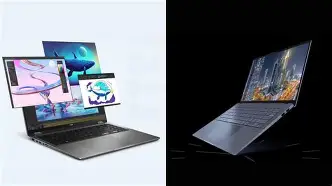
The Case for the Asus Vivobook 14 2026
If you are a student, a creative, or a general office power-user, the Asus Vivobook 14 2026 is the superior choice. The jump in display quality alone is worth the investment. Working on a 120Hz OLED screen compared to the 60Hz panels common in 2025 is like cleaning your glasses; everything from scrolling through text to editing photos feels infinitely smoother. Additionally, the inclusion of Thunderbolt 5 means you can drive multiple high-resolution displays and high-speed external storage without bottlenecking the system. You should choose this if your priority is Screen Quality, Keyboard Ergonomics, and Future-Proofing.

Factors to Consider Before Purchase
When shopping for these devices, keep the following buyer-centric metrics in mind:
Looking for the best Laptops & Computers deals on Amazon?
Browse Now →Portability vs. Durability: The 2025 Intel platform is often found in thinner, more "lifestyle" oriented chassis. While beautiful, they can be more prone to flex. The 2026 Vivobook 14 has a slightly more robust build, designed to survive being shoved into a backpack fifty times a week. Emphasize the Vivobook for university life and the Intel In 2025 for boardrooms.
The Software Longevity: Buying a 2025 model in 2026 means you are one year closer to the end of the driver support lifecycle. While Intel is generally excellent with long-term support, the 2026 Asus has the benefit of being the "latest child," meaning firmware updates and BIOS optimizations will be more frequent for the next 36 months.
Thermal Comfort: Many 14-inch laptops struggle with heat on the bottom of the chassis. The Intel 2025 platform manages this by throttling performance before the heat becomes uncomfortable. The Asus 2026 manages this by spinning the fans faster. If you often work with the laptop literal on your lap, the Intel 2025 is actually the "cooler" experience for your skin.
Conclusion
After a deep dive into the "Blind Test" between the Intel In 2025 Year In and the Asus Vivobook 14 2026, the winner depends entirely on your definition of "better." If "better" means a refined, whisper-quiet experience with enough AI power to handle the future of work, the Intel In 2025 Year In retains its crown as the mobility champion. It remains a testament to what happens when hardware and software are perfectly synchronized during a flagship launch year.
Conversely, if "better" defines a machine that offers the best sensory experience—the best screen, the best keyboard, and the most modern ports—the Asus Vivobook 14 2026 is the clear victor. It proves that the "mainstream" of 2026 has successfully absorbed the "premium" features of 2025, offering a more vibrant and future-ready tool for the average user. Both laptops represent how far the industry has come in the last twenty-four months, where the choice is no longer between "good and bad," but between "excellent and different." For the majority of buyers in 2026, the Asus Vivobook’s superior display and connectivity make it the more logical daily driver, despite the impressive pedigree of the Intel 2025 platform.